





Hebei Jinjiu Metal Products Co.,Ltd


Border Defense Applications of Anti-Tank Mesh Barriers

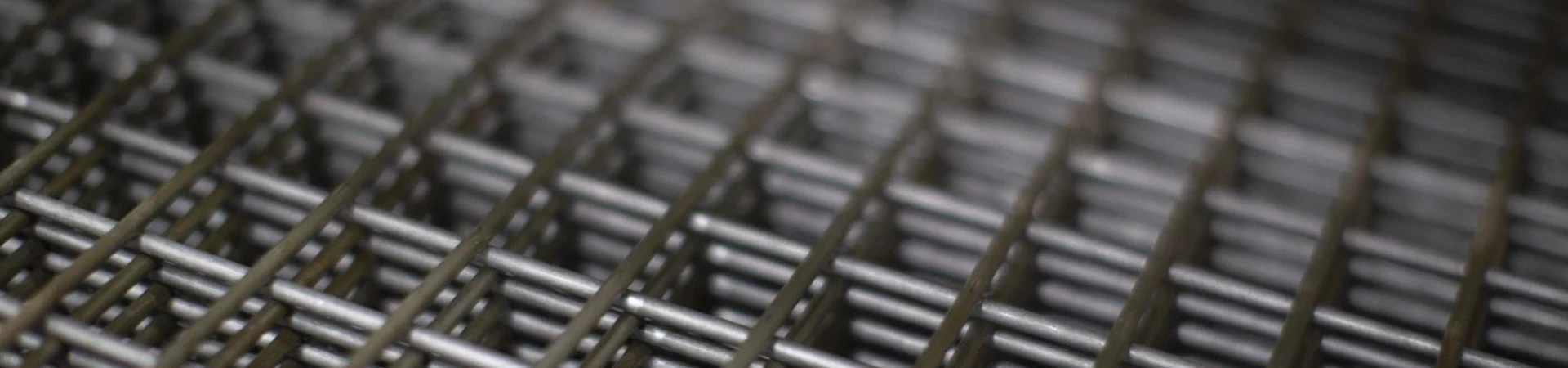
In the modern geopolitical landscape, border security has evolved from simple demarcation lines into complex, multi-layered defensive systems. The challenge for border patrol and military engineering is to create barriers that are physically insurmountable for heavy machinery and armored vehicles, yet flexible enough to be deployed across diverse terrains—from shifting desert sands to dense forest highlands. Among the most effective innovations in this field are anti tank mesh barriers for border security barrier systems. These high-tensile steel structures provide a formidable defense against vehicular incursions while maintaining a logistical and tactical advantage over traditional concrete or earthen fortifications.
Tactical Stealth with the MZP Low-Visibility Border Obstacle
One of the primary strategic requirements in border defense is the ability to monitor and defend a perimeter without prematurely alerting an adversary to the exact nature of the defensive layout. This is where the MZP low-visibility border obstacle excels. Traditional anti-tank ditches or "dragon's teeth" (concrete pyramids) are visible from miles away, allowing an opposing force to plan their breach, bring specific engineering equipment, or simply navigate around the obstacle.
The MZP system, however, utilizes high-strength, thin-profile materials that blend into the natural landscape. From a distance, or through low-resolution satellite and drone surveillance, the barrier is nearly undetectable. This "inconvisibility" creates a tactical trap. An advancing armored column may believe they have found a clear path through a valley or forest clearing, only to find their lead vehicles entangled in a high-tensile mesh that they did not see until it was too late. This disruption of the enemy's momentum is a force multiplier, allowing border security teams to react, reposition, and neutralize the threat while the vehicles are immobilized.
Engineering Resilience: The Power of Steel Wire Anti Tank Mesh
The efficacy of an anti-tank barrier is measured by its "stopping power"—the ability to absorb and dissipate the massive kinetic energy of a multi-ton vehicle moving at speed. A steel wire anti tank mesh does not attempt to stop a tank through brittle resistance, as a wall might. Instead, it functions through a combination of extreme tensile strength and structural elasticity.
Constructed from specialized high-carbon steel alloys, the wire is often cold-drawn to achieve breaking loads that can withstand several dozen tons of force. The mesh is woven or interlocked in a pattern that allows the energy of an impact to be distributed across a wide network of ground anchors and secondary support cables. When a tank or armored personnel carrier (APC) strikes the mesh, the wire does not immediately snap; it stretches and wraps around the vehicle's drive wheels, tracks, and turret. This entanglement is often more effective than a hard stop, as it makes the vehicle incredibly difficult to recover, effectively turning the "attacker" into a permanent physical "obstacle" that blocks the path for the rest of the convoy.
Strategic Deployment of the Anti-Tank Security Barrier
A robust border defense strategy does not rely on a single line of defense but rather a "defense-in-depth" approach. The anti-tank security barrier is a critical component of this depth. Unlike permanent concrete walls, these mesh systems can be deployed rapidly in response to intelligence reports or shifting troop movements.
The modular nature of the anti-tank security barrier allows for:
Terrain Adaptation: The mesh can be draped over uneven ground, through riverbeds, or across steep inclines where traditional heavy construction would be impossible.
Rapid Repair: If a section of the mesh is damaged or breached through explosives, it can be replaced in a fraction of the time it would take to repair a masonry or concrete structure.
Hybrid Defense: The mesh can be integrated with electronic sensors, such as fiber-optic intrusion detection or ground-vibration sensors. Because the mesh is made of steel, it can also be electrified or used to support early-warning systems that alert a central command post the moment the wire is tampered with.
Integrating Anti Tank Mesh Barriers for Border Security Barrier Systems
The integration of anti tank mesh barriers for border security barrier projects provides a comprehensive solution for long-range perimeters. One of the most significant advantages of mesh over solid walls is the preservation of environmental situational awareness. Border guards can see through the mesh, allowing them to monitor the "no-man's land" beyond the barrier. This visibility is crucial for identifying threats before they reach the obstacle, ensuring that the defense is proactive rather than merely reactive.
Furthermore, the mesh design minimizes the impact on local ecology—allowing wind, water, and small wildlife to pass through—which reduces the political and environmental friction often associated with large-scale border projects. However, for a vehicle, the mesh remains an impenetrable web. The sheer density of the steel wire ensures that no amount of engine torque can easily rip through the barrier. In many configurations, the mesh is installed in a "double-fenced" or "concertina" fashion, creating a three-dimensional zone of entanglement that is virtually impossible for tracked vehicles to "climb" or crush.
Anti-Tank Security Barrier: Durability and Maintenance in Harsh Border Environments
Border perimeters often run through some of the harshest environments on Earth, from saline coastal regions to corrosive industrial zones. The longevity of a steel wire anti tank mesh is guaranteed through advanced metallurgy. The wires are typically coated with a thick layer of Galfan (a zinc-aluminum alloy) or PVC-coated for extra protection against oxidation.
This durability is essential because a border barrier is a long-term investment. It must remain at peak tensile strength for decades without constant human intervention. The MZP low-visibility border obstacle is designed to require minimal maintenance; its open-weave structure prevents the accumulation of debris or snow that could put unnecessary strain on the supports. This ensures that the breaking load capacity remains constant, providing a reliable "stop" whenever it is called upon.
Anti-Tank Security Barrier: Securing the Future of the Frontier
The transition from visible, bulky fortifications to high-performance, MZP low-visibility border obstacles marks a new chapter in national security. By leveraging the immense tensile strength and energy-absorption capabilities of steel wire anti tank mesh, nations can secure their borders more effectively, more discreetly, and more economically.
These anti tank mesh barriers for border security barrier systems represent the perfect marriage of physics and strategy. They provide the physical strength needed to stop the heaviest of threats while maintaining the low profile necessary for modern tactical operations. As border threats continue to evolve, the silent, invisible strength of the steel mesh remains one of the most reliable defenses in a nation's arsenal.
Produk Berkaitan

Berita Berkaitan


2026-03-16 14:21:07
Discover durable farming solutions and flexible animal containment with hinge-knot field fence. Combining impact-resistant design and customizable options, Hebei Jinjiu ensures quality for agricultural applications. Explore now: https://www.jinjiuwiremesh.com/field-fencefarm-fence.html
2026-03-16 14:21:07
Discover durable farming solutions and flexible animal containment with hinge-knot field fence. Combining impact-resistant design and customizable options, Hebei Jinjiu ensures quality for agricultural applications. Explore now: https://www.jinjiuwiremesh.com/field-fencefarm-fence.html
2027-04-14 00:00:00
Discover durable farming solutions and flexible animal containment with hinge-knot field fence. Combining impact-resistant design and customizable options, Hebei Jinjiu ensures quality for agricultural applications. Explore now: https://www.jinjiuwiremesh.com/field-fencefarm-fence.html
2026-02-25 15:31:06
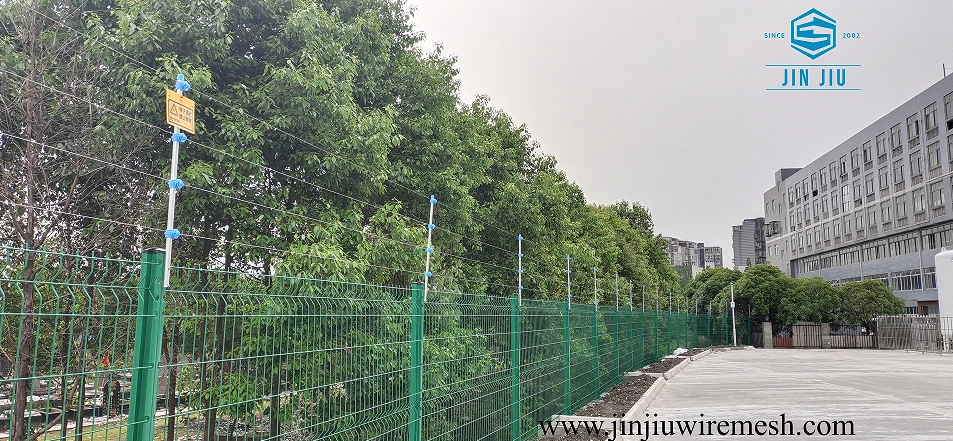
The Strategic Role of the Industrial Electric Fence in Modern Commerce
The protection of corporate and manufacturing assets has transitioned from a matter of simple boundary marking to a complex necessity of risk management.
2026-02-25 15:29:03
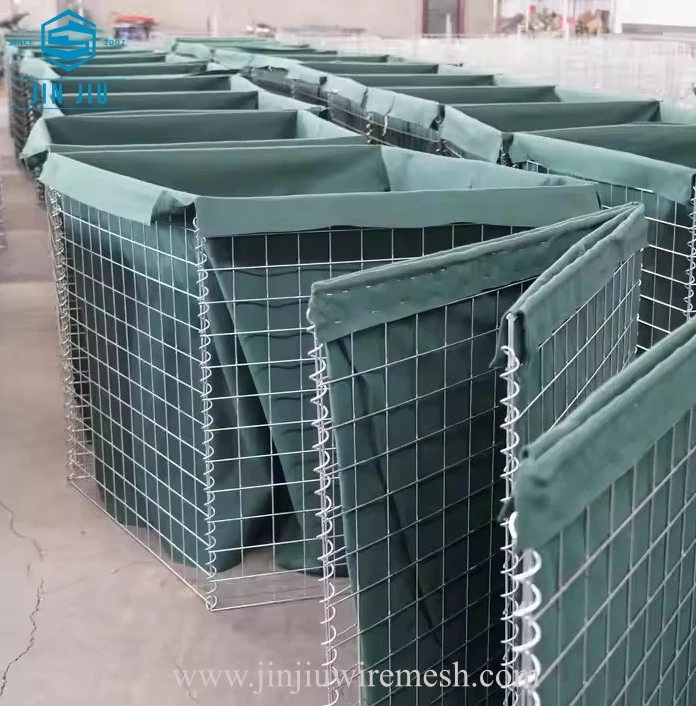
The Evolution of Physical Protection: Bullet Resistant Defensive Barriers in Modern Security
In an increasingly unpredictable global landscape, the requirement for high-level ballistic protection has moved beyond the battlefield and into the core of civilian and industrial security infrastructure.

2026-02-25 15:26:58
The Digital Backbone of Modern Security: Connected Pulse Monitoring Electric Fence Architecture
The traditional concept of a perimeter has undergone a fundamental transformation.
2026-02-25 15:24:13
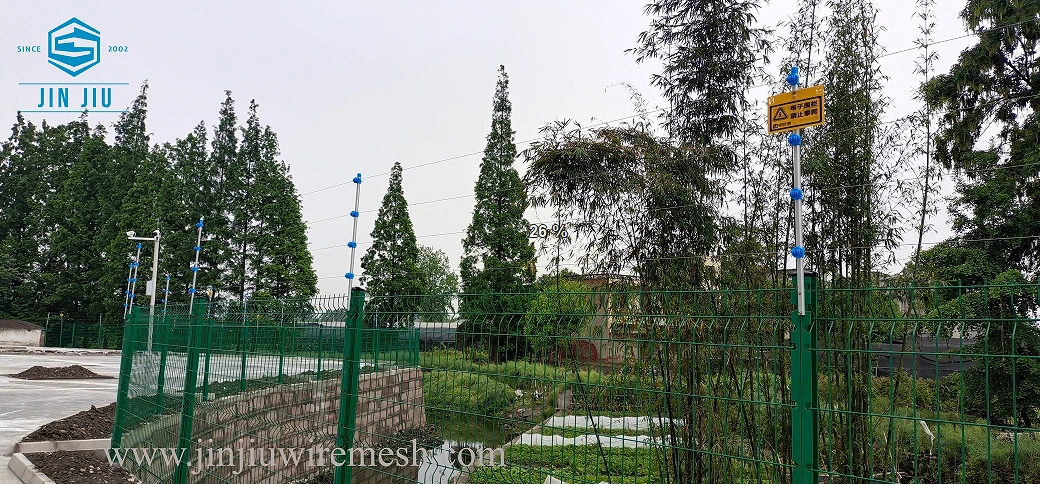
Securing the Unreachable with a Powerful Pulse Electric Fence
In the realm of global security, the distinction between a standard boundary and a high-security perimeter is often defined by the technology pulsing through the wires.
2027-04-14 00:00:00
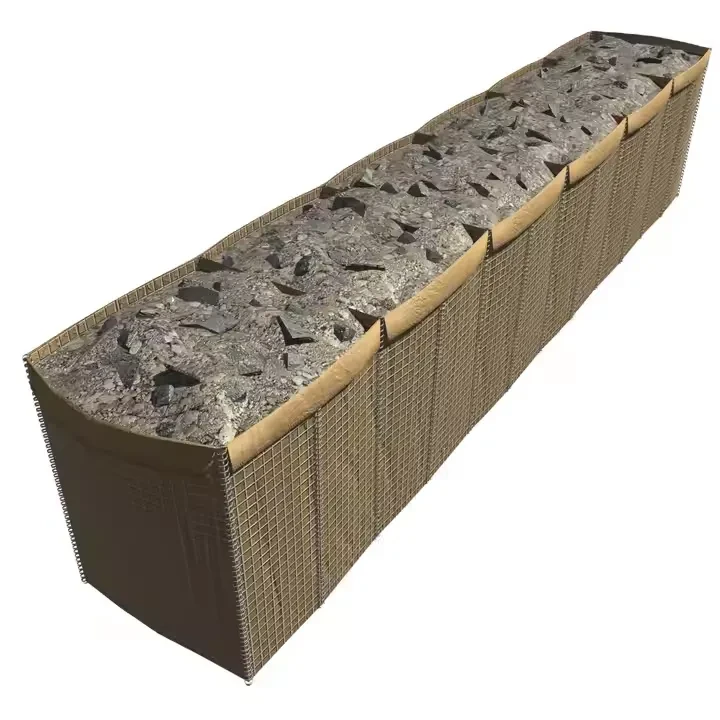
Engineering Resilience with Explosion Proof Defensive Barriers
In an era where industrial safety and national security are increasingly intertwined, the necessity for specialized protection in volatile environments has never been higher.


 Malay
Malay  English
  Albanian
  Arabic
  Bengali
  Czech
Czech  Danish
  Dutch
Dutch  Finnish
  French
  German
  Japanese
  Persian
  Polish
  Portuguese
  Romanian
  Russian
  Serbian
  Spanish
  Swahili