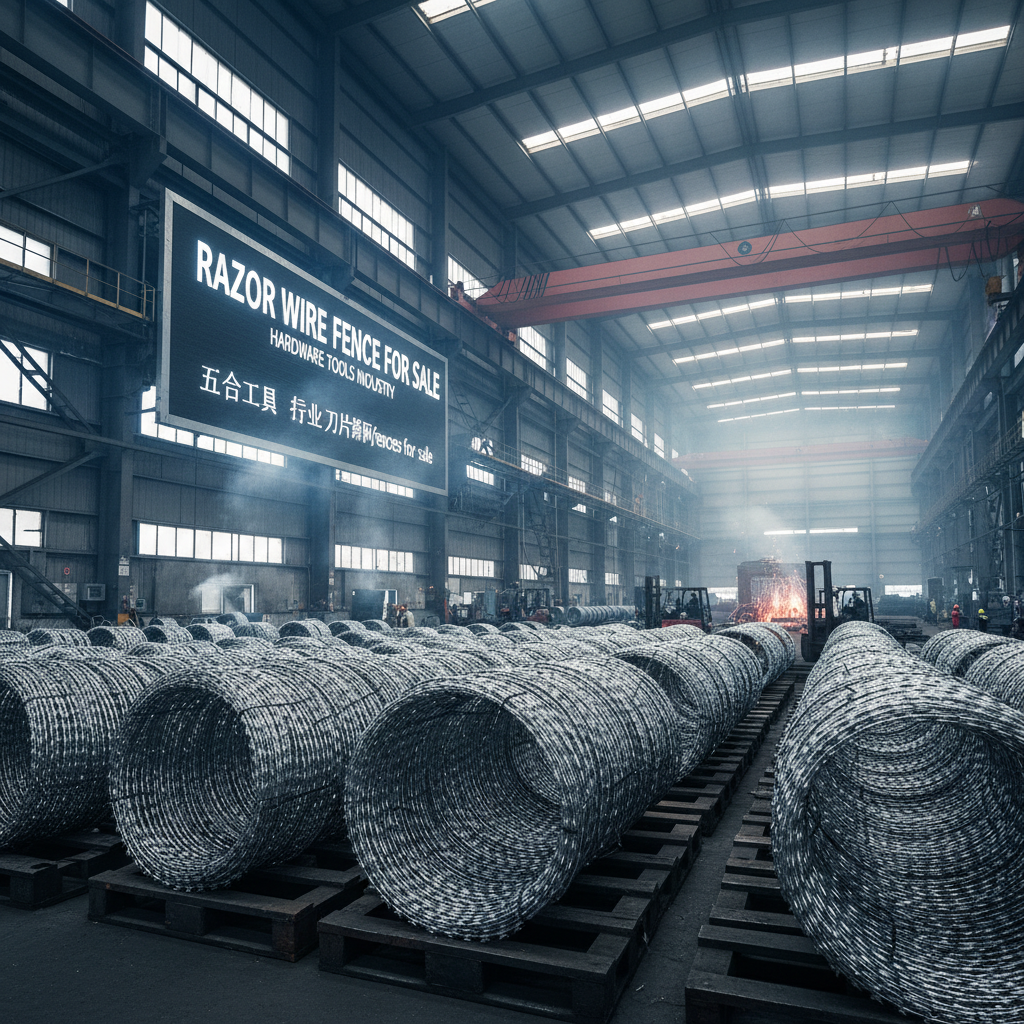
Look, after running around construction sites all year, you start to see patterns. Wire fence for sale...it’s not glamorous, right? But it's everywhere. And honestly, lately everyone's talking about higher tensile strength, PVC coating that actually lasts, and galvanized steel that isn't going to rust through in six months. It’s a race to the bottom on price, but the ones that cut corners…you can tell. You really can.
I've seen so many guys try to save a buck on the wire gauge, thinking “oh, it’ll hold." It won't. Believe me. It’ll sag, it’ll fail, and you'll be back replacing it. And that's just money down the drain. The whole thing really boils down to knowing your application. What are you fencing in? What are you fencing out? Is it just a little garden? Or are you trying to secure a whole industrial facility? Different animals, totally different needs.
The biggest issue? People don't factor in the environment. Salt spray near the coast? Forget about standard galvanized. You need aluminum-coated, and even then…keep an eye on it.
The State of the Wire Fence Industry
To be honest, it’s all about price pressure right now. Everyone's squeezing suppliers. But you’re seeing a push for longer-lasting materials. I’ve been seeing more and more requests for heavier-gauge wire and better coatings. People are tired of replacing fences every couple of years. They're starting to realize that paying a little more upfront can save a lot of headaches later on. There's also a lot of focus on security – higher fences, smaller mesh sizes, things like that.
Have you noticed that prefabricated panels are getting really popular? It speeds up installation, which saves labor costs, and that’s a big deal. But… and there’s always a but… the quality control on those panels can be hit or miss. You gotta inspect everything before you install it. Seriously.
Design Pitfalls and What to Watch Out For
One thing I’ve encountered at a factory last time… people often underestimate the importance of proper post spacing. Too wide, and the fence sags. Too narrow, and you’re wasting posts and money. It’s a simple calculation, but so many get it wrong. And don’t even get me started on corner posts. Those need to be seriously reinforced. They take a beating.
Another trap? Not considering ground conditions. Soft soil? You need deeper post holes and maybe even concrete footings. Rocky soil? Good luck digging those holes! You might need a jackhammer. It all impacts the cost and the installation time.
And strangely, people often forget about gates. A flimsy gate ruins the whole fence. It needs to be just as strong and secure as the rest of the perimeter. I’ve seen too many gates bent and broken because someone skimped on the hardware.
Materials: From Feel to Function
Okay, let’s talk materials. Galvanized steel is the workhorse, right? But the quality of the galvanization varies wildly. You want a nice, even coating – not patchy or thin. You can tell by the weight; a good galvanized coating adds significant weight. Then you’ve got stainless steel, which is fantastic, but expensive. For high-corrosion environments, it's worth the investment, though.
PVC coating… now that’s a tricky one. Some PVC gets brittle in the sun and cracks after a year. Others hold up much better. I always look for a coating that's UV-resistant and has a good thickness. You can usually tell by squeezing it – a good coating will feel substantial, not flimsy. Smell it too, the cheap stuff has a really strong plastic odor.
Chain link, of course, is still popular. It’s relatively inexpensive and effective. But it’s not the most aesthetically pleasing, let’s be honest. And it's easy to climb, so it’s not ideal for high-security applications. I always ask what the long term goal is, because frankly, you can cheap out here, but it will be a pain later.
Real-World Testing and Application
Forget the lab tests. The real test is putting the fence up and seeing how it holds up to the elements. I’ve seen fences tested by literally driving a truck into them. Okay, not my fences, but I’ve heard stories. More realistically, we’re talking about wind load tests, impact tests with weights, and corrosion resistance tests by leaving samples outside for a year.
I always tell my guys to pay attention to how the wire bends and stretches. A good fence will flex a little, but it won’t permanently deform. You want to feel that it’s strong and resilient. And watch the posts. If they're leaning or wobbling, something’s wrong.
Wire Fence for Sale Performance Ratings
Advantages, Disadvantages, and the Honest Truth
Okay, let’s be real. Wire fence for sale is cheap, relatively easy to install, and provides a decent level of security. Those are the pros. But it's not pretty, it can rust, and it requires maintenance. Plus, a determined intruder can usually find a way around it.
Anyway, I think the biggest advantage is its versatility. You can use it for everything from keeping livestock in to keeping people out. And you can customize it to fit your specific needs.
Customization and Special Requests
People always want something special, right? Last week, a guy wanted a fence with a specific mesh size to keep out rabbits but let bees through. We had to order a custom weave for that one. It wasn’t cheap, but he was adamant.
Color is another big one. Standard is usually green or black, but you can get it powder-coated in almost any color you can imagine. Height is easy to adjust, too. We did a job recently where they needed a 10-foot fence for a particularly sensitive facility. It's not always off-the-shelf, but we can usually make it happen.
I'm telling you, the requests get wild.
A Customer Story: The Debacle
Last month, that small boss in Shenzhen who makes smart home devices insisted on changing the interface to , and the result was… well, let’s just say he’s back to using micro-USB. It’s the same with fence gates, I swear. He wanted a fancy gate with a high-tech locking mechanism and a charging port for the electric lock (don't ask). Look, the gate worked fine for a week, then the charging port fried in the rain, and he was furious. It was a disaster. I told him, "Sometimes, simple is better." He didn't listen.
He was trying to be innovative, but he overcomplicated things. That’s what happens a lot. People get caught up in the bells and whistles and forget about the basic functionality. You've gotta ask yourself: What’s the primary purpose of this fence? What’s it supposed to do? Don’t add features just for the sake of adding features.
Later… forget it, I won’t mention it.
Summary of Wire Fence Material Properties
| Material Type |
Corrosion Resistance |
Tensile Strength |
Typical Cost (per 100ft) |
| Galvanized Steel |
Moderate |
8/10 |
$300 - $500 |
| Stainless Steel |
Excellent |
9/10 |
$800 - $1500 |
| PVC Coated Steel |
Good |
7/10 |
$400 - $600 |
| Chain Link |
Fair (requires coating) |
6/10 |
$200 - $400 |
| Aluminum Coated Steel |
Very Good |
7.5/10 |
$450 - $700 |
| High Tensile Wire |
Dependent on Coating |
9.5/10 |
$500 - $900 |
FAQS
Galvanized steel is coated with zinc to prevent rust, making it good for general use, but it will eventually corrode. Stainless steel contains chromium, making it much more resistant to corrosion – it’s the better choice for harsh environments, but also pricier. I've seen galvanized fences rust through in less than five years near the ocean, while stainless steel will last decades.
Proper post spacing is key – generally 8-10 feet apart, depending on the wire gauge. Use heavier-gauge posts and deeper post holes for longer spans. Also, make sure to properly tension the wire during installation. Don’t just pull it tight; use a come-along or fence stretcher to get it really taut. And check it periodically, because things shift over time.
Deer are tricky. They can jump high, but they don’t like to go through tight spaces. A mesh size of 4 inches or less is generally effective, but you might need to add an angled section at the top of the fence to deter them from jumping over. Believe me, I’ve seen deer jump over a 6-foot fence!
Yes, absolutely! Steel wire is highly recyclable. Most scrap metal yards will take it. It’s a good way to reduce waste and get a little money back. Just make sure to remove any non-metal components, like PVC coating or wooden posts, before taking it in.
It depends on the damage. For a small break, you can use a fence splice kit, which includes sleeves and tension bars. For a larger break, you might need to replace a whole section of wire. The important thing is to make a secure connection that can withstand the tension. And don’t just tie it together with wire – that’s a temporary fix at best.
That depends on the length of the fence, the terrain, and the crew size. A simple straight run of 100 feet might take a day or two. A more complex installation with gates, curves, and uneven terrain could take a week or more. Always factor in time for site preparation, post hole digging, and wire tensioning.
Conclusion
So, there you have it. Wire fence for sale isn't glamorous, but it's a necessary part of a lot of projects. It’s about understanding the materials, the installation techniques, and the specific needs of the application. Don’t skimp on quality, don't cut corners, and always factor in the environment.
Ultimately, whether this thing works or not, the worker will know the moment he tightens the screw. And if he’s shaking his head, you’ve got a problem. You can find all the information you need, and even request a quote, at www.jinjiuwiremesh.com.