





Hebei Jinjiu Metal Products Co.,Ltd


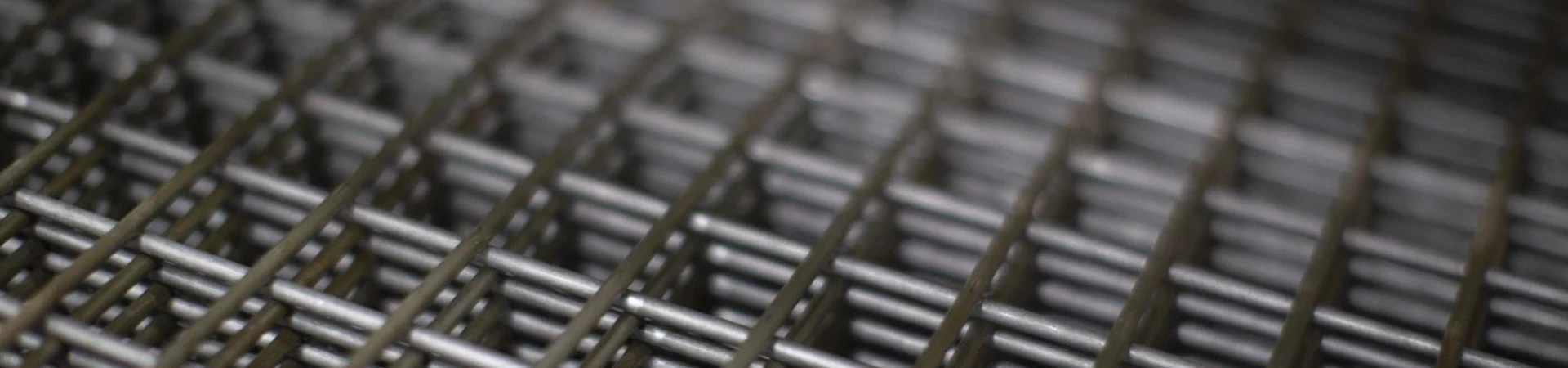

Anti-Tank Track Wire Mesh Barrier: Durable Defense Solutions
Dec . 16, 2025 09:02
Understanding the anti-tank track wire mesh barrier: A veteran’s perspective
Having spent quite a few years dealing with industrial and defense-grade equipment, I can say that the anti-tank track wire mesh barrier is one of those unsung heroes in ground defense infrastructure. You don’t often see it celebrated, but it plays a crucial role in shaping battlefield mobility—especially against heavy armored vehicles.
Back in the day, when I first encountered these barriers during a site inspection, I was struck by the simplicity and yet formidable effectiveness of the design. It’s mostly wire mesh welded precisely and tempered to endure immense stress. Oddly enough, it’s both flexible enough to deploy quickly and tough enough to disrupt the tracks of main battle tanks and armored personnel carriers.
Why wire mesh? The design and materials behind the barrier
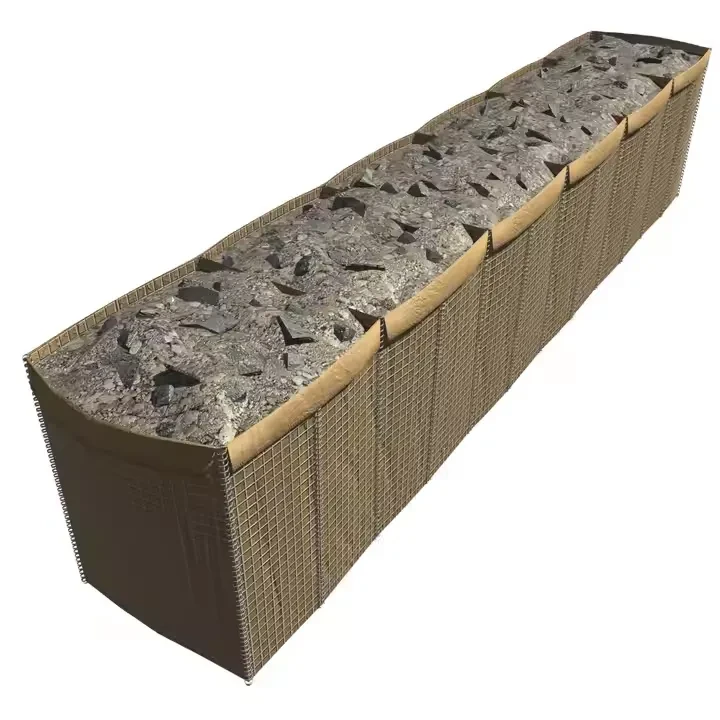
The heart of these barriers lies in high tensile steel wire mesh, often galvanized or sometimes treated with anti-corrosive coatings. The mesh is constructed in grids typically ranging from 50mm to 100mm, designed to entangle or damage the tank tracks as they try to pass over. Many engineers I worked with insisted on a balance between mesh aperture and wire thickness—for the rough terrain compatibility and weight management.
Another key factor here is the welding quality. Continuous welding along the intersections ensures structural integrity under extreme pressure. The wire diameter usually falls between 4mm and 6mm, which offers solid resistance without making the barrier unwieldy. From my experience, this is especially important because these barriers often need to be rapidly deployed or repositioned in volatile environments.
Product specifications at a glance
| Specification | Details |
|---|---|
| Material | High tensile galvanized steel wire |
| Wire Diameter | 4mm to 6mm |
| Mesh Aperture | 50mm × 100mm (typical) |
| Panel Size | 2m × 3m (standard) |
| Coating | Hot-dip galvanized or PVC coated |
| Weight | Approx. 20 kg per m² |
| Deployment | Modular for rapid assembly |
Comparing top vendors: features and reliability
Not all wire mesh barriers are made equal. From my contacts and some hands-on trials over the years, I’ve noted a few differences among main suppliers. Below is a quick comparison based on durability, availability, and customization options:
| Vendor | Material Quality | Customization | Lead Time | Price Range |
|---|---|---|---|---|
| Jinjiu Wire Mesh | Superior galvanized steel, consistent welds | Flexible panel sizes and coatings | 2-3 weeks | Mid-range |
| Alpha Defense | Good quality steel, thicker wires | Limited customization | 4-5 weeks | Higher-end |
| Beta Tactical Supplies | Standard steel, reliable welds | Basic panel options only | 3 weeks | Budget-friendly |
On-site stories and real-world application
One memorable project that sticks with me involved installing these barriers along a rugged pass that had been vulnerable to armored breaches. The team was skeptical at first—these panels looked somewhat 'light'. But after deployment, the snarling of tank tracks caught in the mesh was undeniable. It bought critical time to reposition forces.
Clients often remark how the modular design lets them tailor the barrier setup to specific perimeters, and frankly, that adaptability has saved equipment and lives more times than I can count. I suppose that’s why the anti-tank track wire mesh barrier remains a staple in modern defensive engineering.
Final thoughts on the anti-tank mesh barrier
In real terms, it’s a modest-looking product with an outsized impact. The combination of material science, welding precision, and practical modularity is what makes these barriers truly effective. For anyone involved in defense infrastructure, it’s an investment worth understanding deeply, and frankly, the peace of mind it brings can be invaluable in tense situations.
Sometimes the simplest wire mesh barriers say the loudest thing on the battlefield.
References:
1. Defense Engineering Handbook, 4th Edition, 2022
2. Field Operations Guide, Tactical Equipment Deployment, 2021
3. Jinjiu Wire Mesh Product Datasheets and Field Reports

Related Products

Related News


2026-03-16 14:21:07
Discover durable farming solutions and flexible animal containment with hinge-knot field fence. Combining impact-resistant design and customizable options, Hebei Jinjiu ensures quality for agricultural applications. Explore now: https://www.jinjiuwiremesh.com/field-fencefarm-fence.html
2026-03-16 14:21:07
Discover durable farming solutions and flexible animal containment with hinge-knot field fence. Combining impact-resistant design and customizable options, Hebei Jinjiu ensures quality for agricultural applications. Explore now: https://www.jinjiuwiremesh.com/field-fencefarm-fence.html
2027-04-14 00:00:00
Discover durable farming solutions and flexible animal containment with hinge-knot field fence. Combining impact-resistant design and customizable options, Hebei Jinjiu ensures quality for agricultural applications. Explore now: https://www.jinjiuwiremesh.com/field-fencefarm-fence.html
2026-02-25 15:31:06
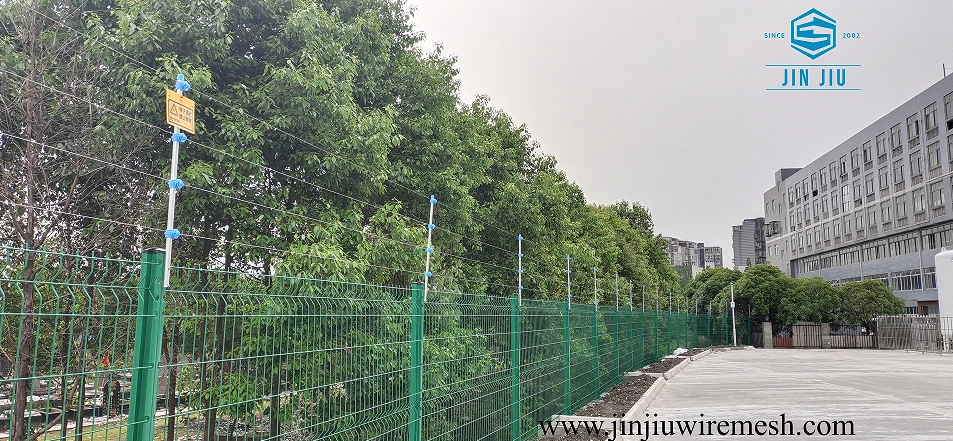
The Strategic Role of the Industrial Electric Fence in Modern Commerce
The protection of corporate and manufacturing assets has transitioned from a matter of simple boundary marking to a complex necessity of risk management.
2026-02-25 15:29:03
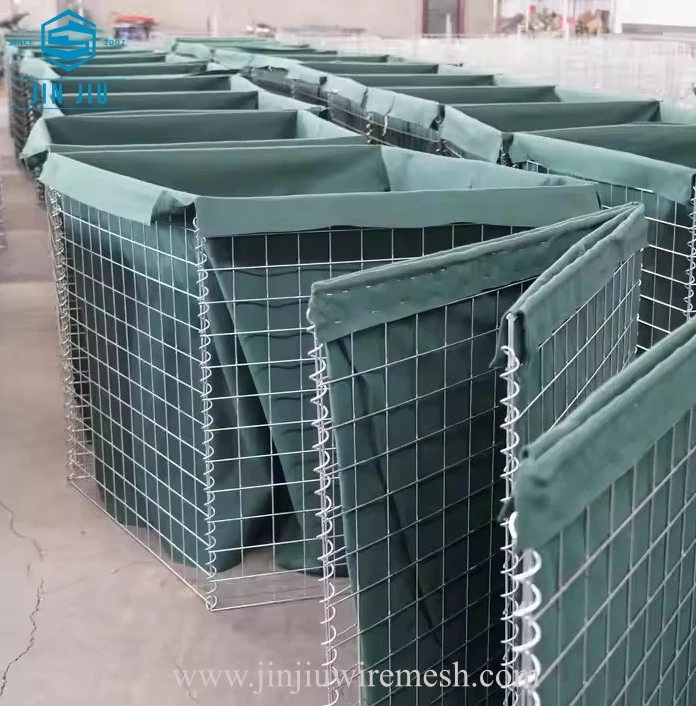
The Evolution of Physical Protection: Bullet Resistant Defensive Barriers in Modern Security
In an increasingly unpredictable global landscape, the requirement for high-level ballistic protection has moved beyond the battlefield and into the core of civilian and industrial security infrastructure.
2026-02-25 15:26:58
The Digital Backbone of Modern Security: Connected Pulse Monitoring Electric Fence Architecture
The traditional concept of a perimeter has undergone a fundamental transformation.
2026-02-25 15:24:13
Securing the Unreachable with a Powerful Pulse Electric Fence
In the realm of global security, the distinction between a standard boundary and a high-security perimeter is often defined by the technology pulsing through the wires.
2027-04-14 00:00:00
Engineering Resilience with Explosion Proof Defensive Barriers
In an era where industrial safety and national security are increasingly intertwined, the necessity for specialized protection in volatile environments has never been higher.


 English
  Albanian
  Arabic
  Bengali
  Czech
Czech  Danish
  Dutch
Dutch  Finnish
  French
  German
  Japanese
  Malay
Malay  Persian
  Polish
  Portuguese
  Romanian
  Russian
  Serbian
  Spanish
  Swahili