





Hebei Jinjiu Metal Products Co.,Ltd


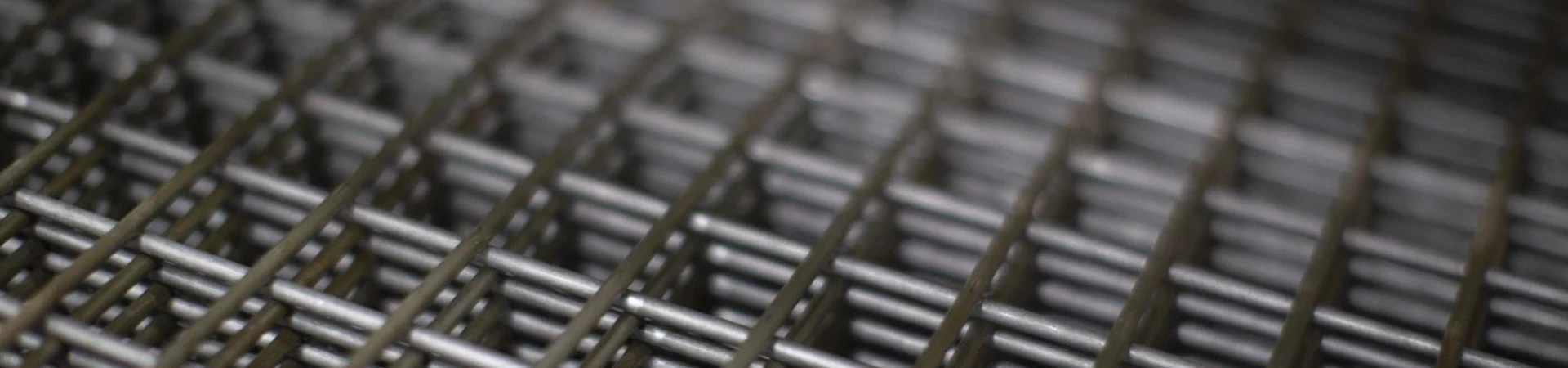

Defensive Barriers: Faster Setup, Stronger Protection?
Oct . 05, 2025 23:35
Field Notes on Modern Defensive Barrier Systems: What Buyers Actually Need to Know
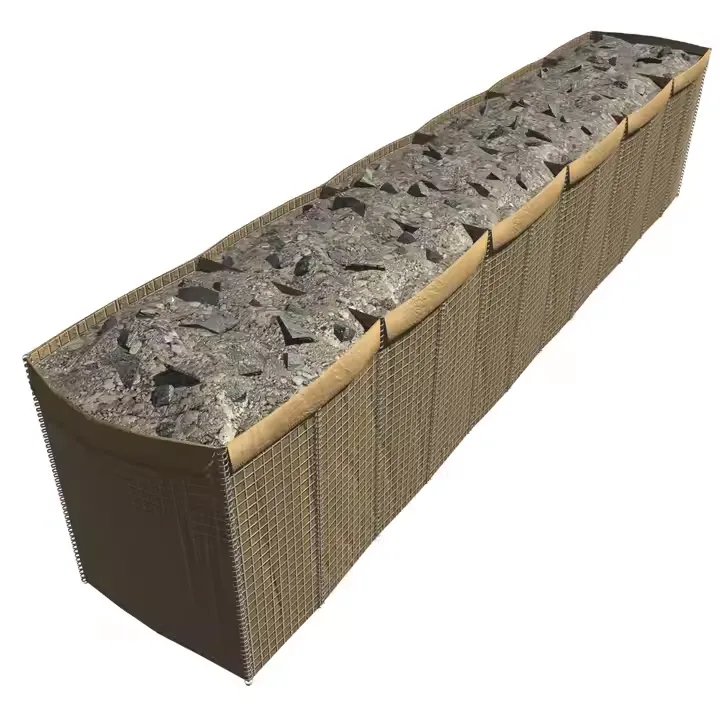
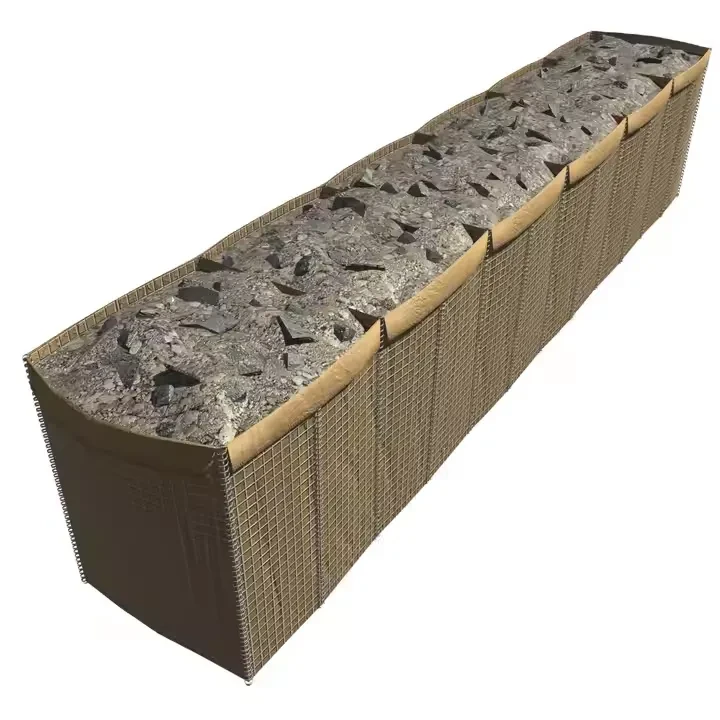
I’ve spent more days than I can count walking flood levees and dusty forward operating bases, watching crews deploy defensive barriers at speed. The short version? They’ve evolved—smarter coatings, cleaner welds, faster connectors. The long version (and the buying advice) is below. To be honest, the difference between a hassle and a smooth install is usually in the small specs: wire grade, liner weight, and how the spirals or C-rings behave when your gloves are muddy.
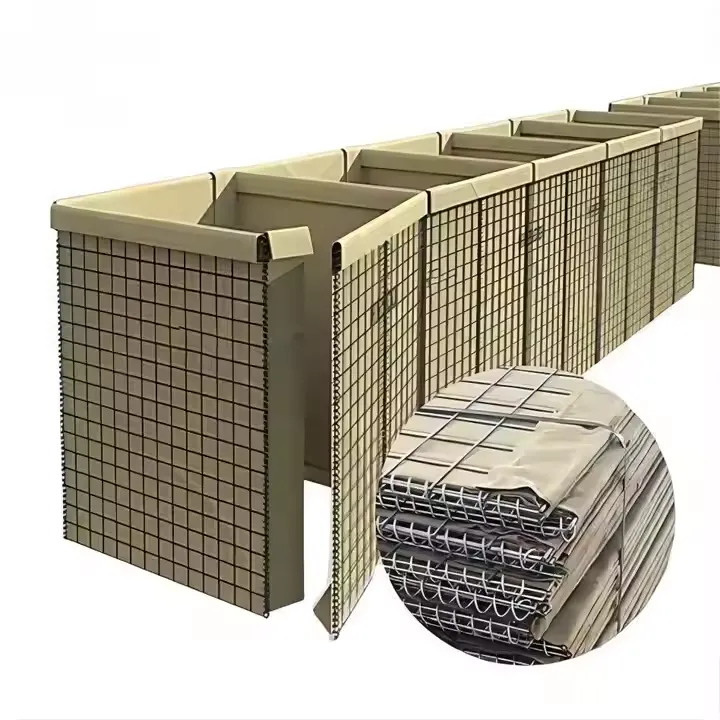
What’s driving demand
- Resilience: Flood mitigation and rapid berming for wild-weather seasons.
- Security: Temporary-to-semi-permanent perimeter walls for bases, utilities, and events.
- Lifecycle math: Coatings like Zn–5Al (Galfan) stretching service life—surprisingly noticeable in coastal air.
Many customers say they pick defensive barriers because they’re modular, don’t need specialized foundations, and take a beating without fuss. Fair point.
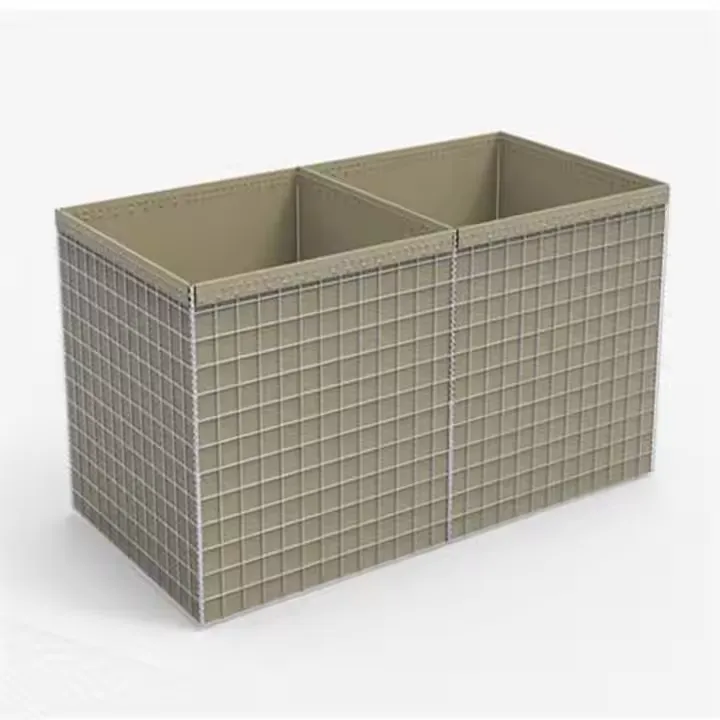
Typical product specs (field-proven ranges)
| Parameter | Spec (≈/range) | Notes |
|---|---|---|
| Wire material | Low-carbon steel, 450–550 MPa tensile | Cold-drawn, consistent weldability |
| Coating | Zn–5Al (Galfan) 230–275 g/m² or HDG | ASTM A856/A856M; ASTM A641 options |
| Mesh aperture | ≈75×75 mm (±3 mm) | Welded wire, square grid |
| Wire diameter | 4.0–5.0 mm | Heavier gauge for blast/flood |
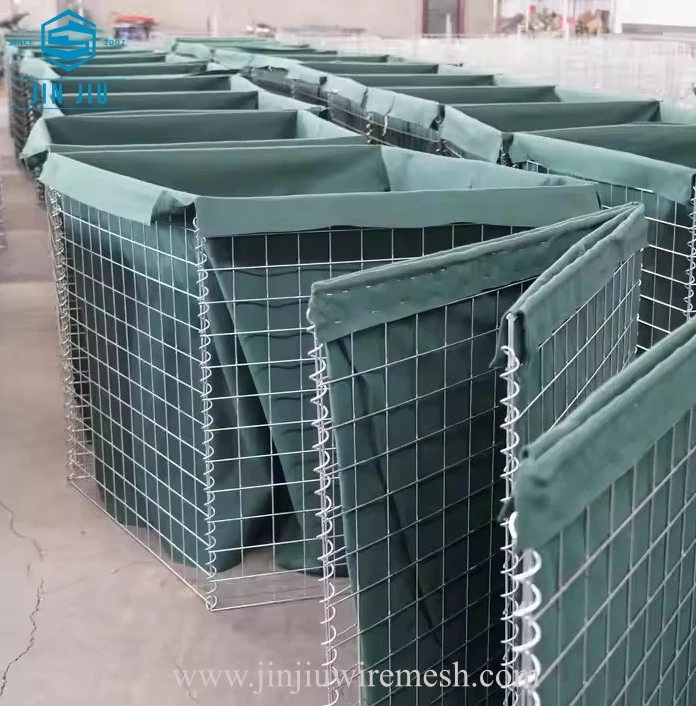
| Geotextile liner | PP nonwoven 300–450 g/m² | UV-stabilized; sand/green colors |
| Unit dimensions | H 0.6–1.4 m; W 0.6–1.5 m; L 3–10 m | Linked modules extend length |
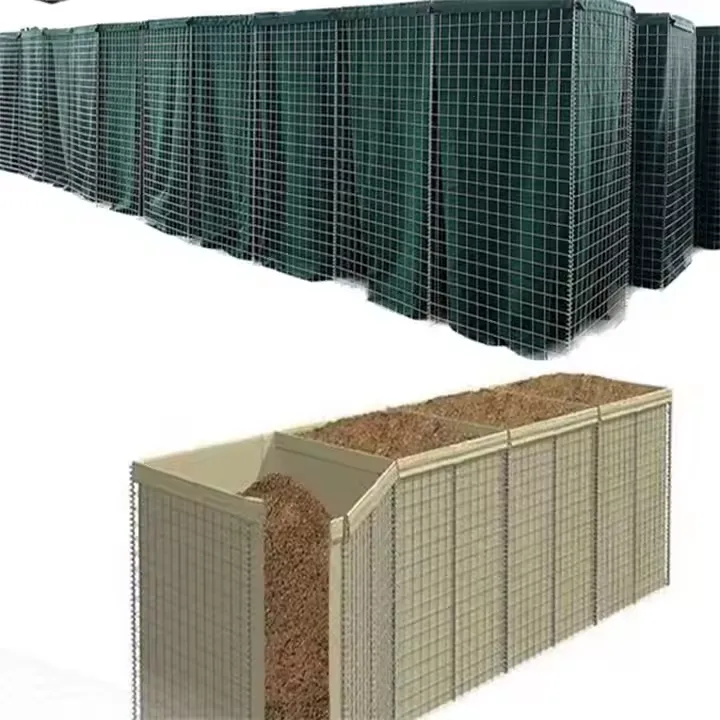
| Connectors | Helical spirals / C-rings | Fast install, less snags |
| Service life | ≈10–25 yrs (environment-dependent) | Real-world use may vary |
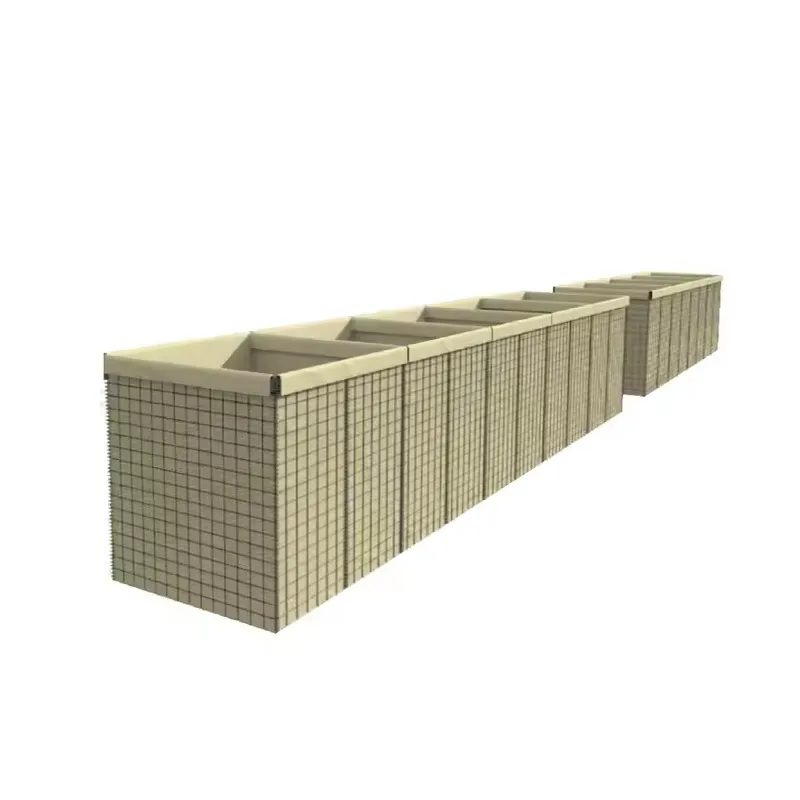
From materials to testing: the process in brief
Materials arrive as certified coil wire and UV-rated PP fabric. Panels are resistance welded, then spirals formed. Liners are stitched and spot-fixed. Factory tests typically include mesh gauge checks, coating mass, weld shear, and liner tear/UV aging (ISO 4892). Salt spray (ASTM B117, 480–720 h) is common. Finished defensive barriers fold flat for palletization; assembly on-site is 2–3 people per 10 m in steady rhythm, faster with a loader for fill.
Where they’re used
- Rapid levees and flood rings for towns and substations.
- Perimeter hardening for bases, depots, and event zones.
- Blast stand-off berms around fuel farms and transformers.
- Erosion control and temporary retaining where shoring is overkill.
Feedback I hear a lot: “We got 300 meters installed before lunch; zero panel rework.” That’s usually down to tight weld tolerances and decent spirals—sounds trivial until it isn’t.
Vendor snapshot (buy smart)
| Vendor | Coating options | Liner | Lead time | Certs | Notes |
|---|---|---|---|---|---|
| JINJIU Wire Mesh (Anping, China) | Galfan / HDG | 300–450 g/m² PP | ≈2–4 weeks | ISO 9001 | Customization-friendly; origin: High-tech Industrial Park, Anping County Hebei |
| International Tier-1 | Premium Galfan | 350–500 g/m² | ≈3–6 weeks | ISO 9001, defense approvals | Higher list prices; strong global stock |
| Regional OEM | HDG only | 250–300 g/m² | ≈1–3 weeks | Varies | Budget option; check weld QA |
Customization and real-world cases
Custom heights (say, 1.0 m flood rings) and tan/OD liners are common. I’ve seen defensive barriers filled with quarry rock for river bends—zero movement after a nasty storm. In a desert FOB, a 1.37 m wall with staged berms cut dust and noise; crew said the helical joins saved an hour per section. A refinery client ran ASTM B117 salt-spray samples to 720 h with no red rust—encouraging for coastal siting.
Standards and compliance (what to ask vendors)
- Wire and mesh: ASTM A856/A856M (Zn–Al), ASTM A641, EN 10223-8 (gabions).
- Geotextile: Grab tensile/tear per ASTM D5034/D4533; UV per ISO 4892.
- Corrosion testing: ASTM B117 salt spray; coating mass certificates.
- Blast guidance: UFC 3-340-02 for standoff planning; get project-specific calcs.
- Quality: ISO 9001 certificates; weld shear test reports.
If your scope involves critical blast loads, insist on engineering submittals and, ideally, mock-up testing. For flood projects, ask for filled-unit deflection data and liner seam reports. It sounds nitpicky—until the river rises.
References
- ASTM A856/A856M – Standard Specification for Zinc-5% Aluminum-Mischmetal Alloy-Coated Carbon Steel Wire
- EN 10223-8 – Steel wire and wire products for fences, gabions and netting
- ASTM B117 – Standard Practice for Operating Salt Spray (Fog) Apparatus
- ISO 4892 – Plastics—Methods of exposure to laboratory light sources
- UFC 3-340-02 – Structures to Resist the Effects of Accidental Explosions

Related Products
Related News


2026-03-16 14:21:07
Discover durable farming solutions and flexible animal containment with hinge-knot field fence. Combining impact-resistant design and customizable options, Hebei Jinjiu ensures quality for agricultural applications. Explore now: https://www.jinjiuwiremesh.com/field-fencefarm-fence.html
2026-03-16 14:21:07
Discover durable farming solutions and flexible animal containment with hinge-knot field fence. Combining impact-resistant design and customizable options, Hebei Jinjiu ensures quality for agricultural applications. Explore now: https://www.jinjiuwiremesh.com/field-fencefarm-fence.html
2027-04-14 00:00:00
Discover durable farming solutions and flexible animal containment with hinge-knot field fence. Combining impact-resistant design and customizable options, Hebei Jinjiu ensures quality for agricultural applications. Explore now: https://www.jinjiuwiremesh.com/field-fencefarm-fence.html
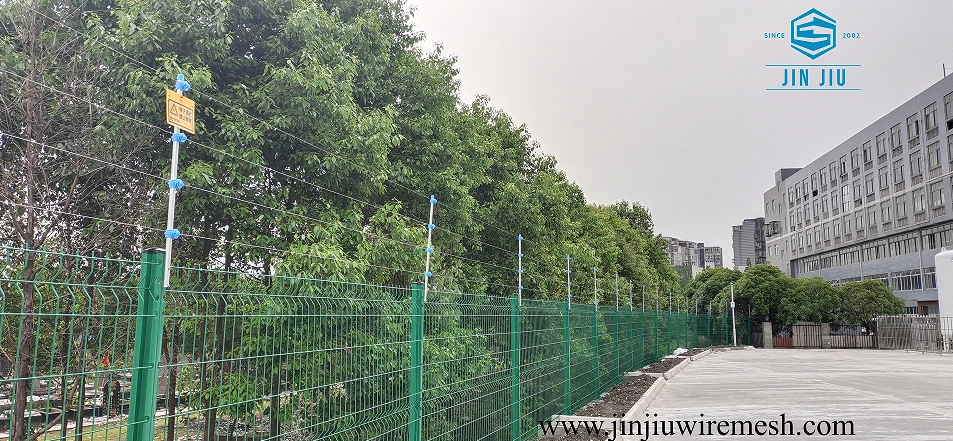
2026-02-25 15:31:06
The Strategic Role of the Industrial Electric Fence in Modern Commerce
The protection of corporate and manufacturing assets has transitioned from a matter of simple boundary marking to a complex necessity of risk management.
2026-02-25 15:29:03
The Evolution of Physical Protection: Bullet Resistant Defensive Barriers in Modern Security
In an increasingly unpredictable global landscape, the requirement for high-level ballistic protection has moved beyond the battlefield and into the core of civilian and industrial security infrastructure.
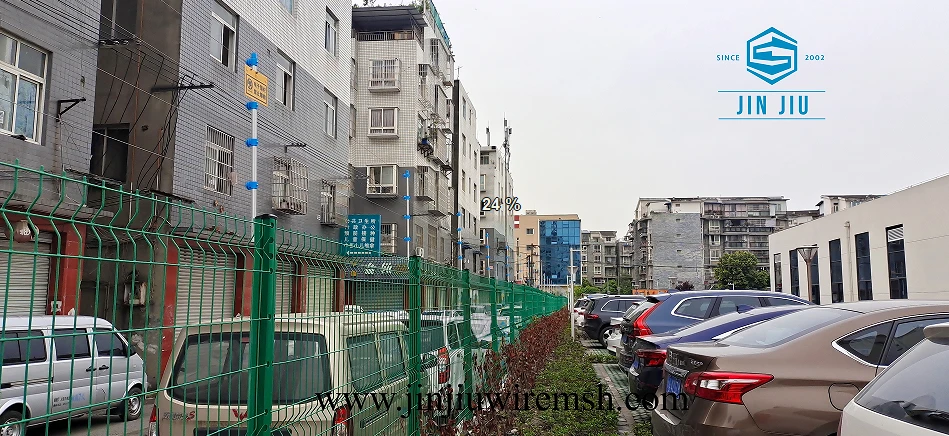
2026-02-25 15:26:58
The Digital Backbone of Modern Security: Connected Pulse Monitoring Electric Fence Architecture
The traditional concept of a perimeter has undergone a fundamental transformation.
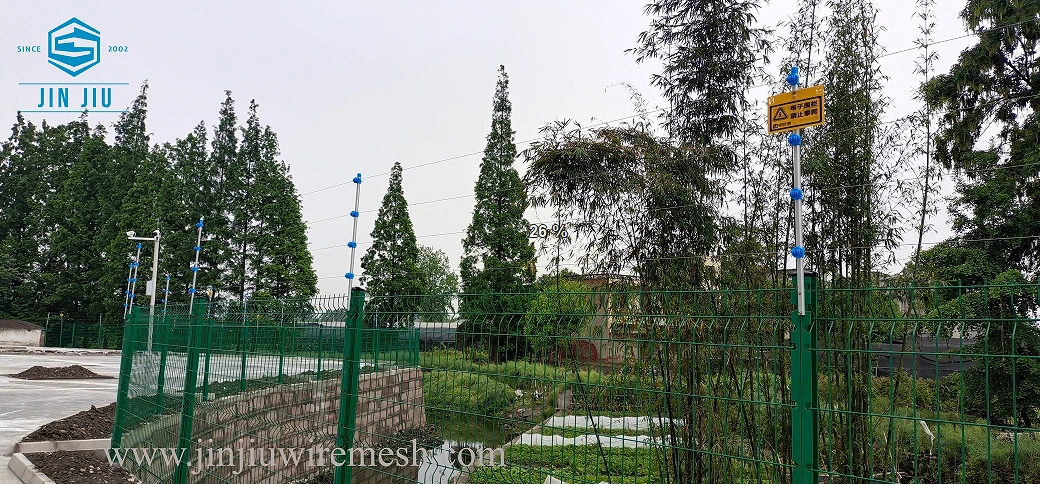
2026-02-25 15:24:13
Securing the Unreachable with a Powerful Pulse Electric Fence
In the realm of global security, the distinction between a standard boundary and a high-security perimeter is often defined by the technology pulsing through the wires.
2027-04-14 00:00:00
Engineering Resilience with Explosion Proof Defensive Barriers
In an era where industrial safety and national security are increasingly intertwined, the necessity for specialized protection in volatile environments has never been higher.


 English
  Albanian
  Arabic
  Bengali
  Czech
Czech  Danish
  Dutch
Dutch  Finnish
  French
  German
  Japanese
  Malay
Malay  Persian
  Polish
  Portuguese
  Romanian
  Russian
  Serbian
  Spanish
  Swahili