





Hebei Jinjiu Metal Products Co.,Ltd


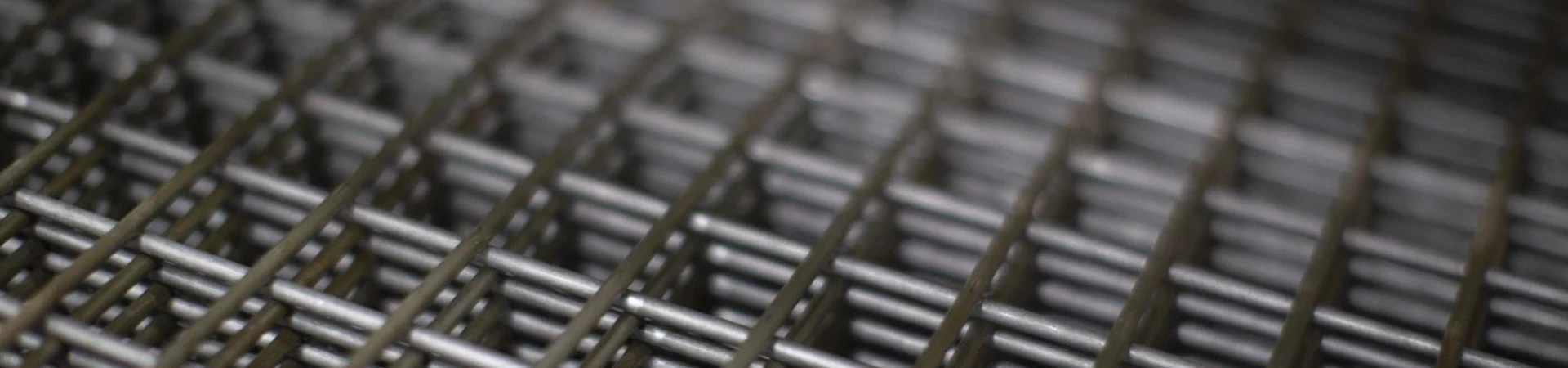

Security KN Tank Wire Mesh Barrier – Durable Industrial Protection Solutions
Nov . 30, 2025 08:50
Understanding the Security KN Tank Wire Mesh Barrier: Why It Matters Today
If you’re diving into infrastructure and security tech, you’ve probably come across the term security kn tank wire mesh barrier. It’s a bit of a mouthful but, in essence, these barriers are becoming essential worldwide. Why? Because as urbanization spreads and industries expand, the need for robust, flexible, and cost-effective protection grows in tandem. These wire mesh barriers not only secure sensitive tanks and infrastructure but also aid in disaster-prone zones and humanitarian aid efforts, making their understanding a global priority.
At a quick glance: these mesh barriers are simple in concept yet profound in their impact, offering a unique combination of durability, modular design, and ease of deployment. So whether you’re a site manager, engineer, or planner, knowing their nuances can be a game changer. Let’s jump in.
The Worldwide Relevance of Security KN Tank Wire Mesh Barriers
Globally, according to the International Organization for Standardization (ISO), over 75% of hazardous material sites require perimeter security to minimize accidental leaks or sabotage. In regions where petrochemical tanks, water reservoirs, or fuel depots are exposed, mishaps can ripple out to devastating environmental and economic effects.
Data from the UN Statistics Division shows that industrial accidents impacting public safety rise every year without adequate containment measures. Enter the job of the security kn tank wire mesh barrier: designed to provide an impenetrable (yet often transparent) safeguard around these critical installations. It helps solve the classic problem — how to fortify without completely closing off visibility and airflow.
What Exactly Is a Security KN Tank Wire Mesh Barrier?
Put simply, it’s a heavy-duty fencing system made from tightly woven steel or alloy wires, wrapped or welded into panels, that surround tank installations or other vulnerable industrial assets. The term "KN" commonly references the strength rating, indicating the tensile force the mesh can withstand — a crucial factor in physical security.
These barriers aren't your average garden fence. Think of them as a hybrid between robust steel cages and flexible grids, engineered for demanding environments where traditional walls fall short. Industries ranging from oil, gas, water treatment to emergency response rely on these structures to ensure tanks don’t just sit there, but are actively shielded from theft, sabotage, or accidental damage.
Mini Takeaway:
At its core, the security kn tank wire mesh barrier answers a modern need for durable, practical protection that’s especially relevant in an era of increasing infrastructure complexity and security concerns.
Core Components that Define Their Effectiveness
1. Durability and Strength
These barriers must resist the elements, physical impact, and sometimes even chemical exposure. Many use galvanized steel coated with anti-corrosion materials to extend lifespan beyond two decades under harsh weather conditions.
2. Scalability and Modular Design
The beauty is in modularity — panels can be connected or moved with relative ease, making the barrier adaptable for different tank sizes or quickly shifted around changing layouts. Some suppliers use interlocking edges that don’t require welding on-site.
3. Cost Efficiency
Compared to concrete or masonry walls, wire mesh barriers offer resource savings both in installation and maintenance — which in large-scale industrial zones can add up to significant budgetary relief.
4. Visibility and Ventilation
Mesh barriers allow operators to monitor tanks visually without physical barriers obstructing views or airflow — important in volatile chemical storage where ventilation equals safety.
5. Customization Options
Thickness, mesh size, coating type, and even height can be tailored to specific needs, reflecting an industry trend toward bespoke security solutions rather than one-size-fits-all.
Mini Takeaway:
Choosing a security kn tank wire mesh barrier in practice balances strength, cost, and flexibility — a trifecta rarely matched by alternatives.
Global Applications & Real-World Use Cases
From the sprawling oil fields of the Middle East to water reservoirs in European municipalities, these barriers feature prominently. Oddly enough, humanitarian agencies have adopted them for security kn tank wire mesh barrier to secure temporary water tanks in refugee camps — preventing tampering or contamination in vulnerable populations.
Industrial zones in Southeast Asia rely on these barriers because their fast assembly suits dynamic sites, where equipment frequently relocates. Meanwhile, governments in North America sometimes retrofit existing fences with mesh systems to meet tightening ISO standards.
Product Specification Table: Typical Security KN Tank Wire Mesh Barrier
| Specification | Detail |
|---|---|
| Material | Galvanized Steel Wire (Anti-corrosion coating) |
| Mesh Size | 25mm x 25mm (customizable) |
| Tensile Strength (KN) | ≥ 5 kN |
| Panel Size | 2m x 3m (adjustable) |
| Installation | Modular, bolt or clamp-fit |
| Lifespan | Approximately 20+ years with maintenance |
Vendor Comparison: Choosing the Right Supplier
| Feature | Jinjiu Wire Mesh Co. | SteelPro Barriers Ltd. | SecureFence Global |
|---|---|---|---|
| Customization Options | High (mesh size, coating, panels) | Medium (standard sizes only) | Medium (color options but limited sizing) |
| Delivery Speed | 2-3 weeks | 4-6 weeks | 3-5 weeks |
| Industry Certifications | ISO 9001, ASTM Compliant | ASTM only | ISO 14001 (Sustainability) |
| Warranty | 5 years | 3 years | 4 years |
| Global Shipping Options | Yes, multi-region | Limited | Yes, but higher fees |
Why Invest in Security KN Tank Wire Mesh Barriers? The Long-Term Perspective
Beyond the raw numbers, these barriers bring peace of mind. Imagine safeguarding millions of liters of volatile gas or clean water from sabotage or accidental contamination — the social and ethical implications are significant. Moreover, the longevity and low maintenance costs turn these barriers into smart investments, especially for industries operating in sensitive or remote environments.
Some engineers I've spoken with emphasize the innovation angle, too — how using advanced steel alloys and environmentally friendly coatings ties into broader sustainability goals worldwide. So these barriers feel like more than just fences; they're lines of defense that amplify security while aligning with green commitments.
The Road Ahead: Emerging Trends in Wire Mesh Security
Looking forward, the future of security kn tank wire mesh barriers is anything but static. We’re seeing research into nano-coatings that self-heal corrosion damage and sensor-embedded mesh that can detect tampering or structural weaknesses in real time. The push for green energy industries creates new use cases where these barriers need to integrate with smart grids or renewable fuel tanks.
Automation is also on the rise — some think tanks speculate on robotic systems that can deploy and modify these meshes autonomously in volatile zones. The digital transformation of industrial security is at a fascinating juncture.
Common Challenges and How Experts Overcome Them
That said, no solution is without its quirks. A frequent gripe relates to the logistics of installing these barriers in uneven terrain or restricted urban zones — uneven soil can skew panel alignment. Corrosion in marine environments, despite coatings, can also become a headache.
Experts recommend thorough site surveys and the inclusion of adjustable base plates that compensate for uneven ground. Plus, regular inspections combined with emerging protective treatments help extend service life beyond expectations. When budgets are tight, it’s often about smart phased installations versus all-at-once.
FAQ: Practical Questions About Security KN Tank Wire Mesh Barrier
- Q1: How resistant are these barriers to extreme weather conditions?
- A1: Typically, with galvanized and coated steel, these barriers withstand high winds, heavy rain, and even snow. Their tensile strength ensures they don’t warp easily. However, frequent inspection is important in salt-laden or very humid environments to check for corrosion.
- Q2: Can these wire mesh barriers be customized for different tank sizes?
- A2: Absolutely. Modular panels allow customization in height, length, and mesh density. Vendors like Jinjiu Wire Mesh provide tailored solutions to fit tanks ranging from small storage units to huge industrial reservoirs.
- Q3: How fast can these barriers be deployed on-site?
- A3: Depending on panel size and crew experience, installation can take anywhere from a few hours for small setups to a couple of days for large-scale sites. The modular bolt-on design facilitates quick assembly without heavy machinery.
- Q4: Are security kn tank wire mesh barriers environmentally friendly?
- A4: When sourced from recycled steel and combined with non-toxic coatings, they are quite sustainable. Plus, their long lifespan and low maintenance reduce material waste over time, aligning with eco-conscious industrial standards.
- Q5: What measures are needed for maintenance?
- A5: Regular visual inspections to spot rust or damaged panels, prompt replacement or repair, and cleaning to avoid debris buildup. Some companies offer maintenance contracts to ensure barriers stay effective for decades.
Wrapping Up: Secure Your Assets with Confidence
To put it plainly, investing in a security kn tank wire mesh barrier isn’t just about fences — it’s about protecting people, environments, and livelihoods. Their adaptability, durability, and relatively low costs make them a top choice globally, with a future that’s only getting brighter thanks to ongoing innovations.
If securing your tanks or critical infrastructure is on your radar, it makes sense to explore the options at Jinjiu Wire Mesh, a supplier who understands this niche inside out.
Mini Takeaway:
Whether you’re in industry, humanitarian aid, or municipal planning, these wire mesh barriers offer a solid blend of protection, practicality, and vision.
References:

Related Products

Related News


2026-03-16 14:21:07
Discover durable farming solutions and flexible animal containment with hinge-knot field fence. Combining impact-resistant design and customizable options, Hebei Jinjiu ensures quality for agricultural applications. Explore now: https://www.jinjiuwiremesh.com/field-fencefarm-fence.html
2026-03-16 14:21:07
Discover durable farming solutions and flexible animal containment with hinge-knot field fence. Combining impact-resistant design and customizable options, Hebei Jinjiu ensures quality for agricultural applications. Explore now: https://www.jinjiuwiremesh.com/field-fencefarm-fence.html
2027-04-14 00:00:00
Discover durable farming solutions and flexible animal containment with hinge-knot field fence. Combining impact-resistant design and customizable options, Hebei Jinjiu ensures quality for agricultural applications. Explore now: https://www.jinjiuwiremesh.com/field-fencefarm-fence.html
2026-02-25 15:31:06
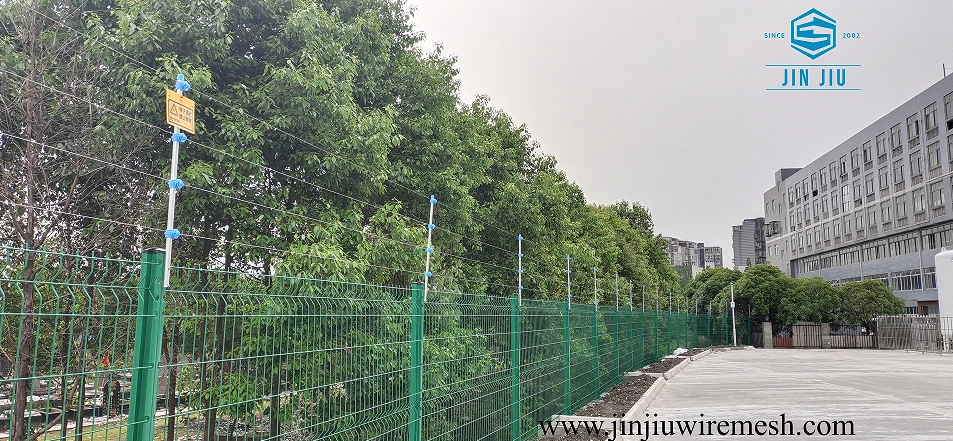
The Strategic Role of the Industrial Electric Fence in Modern Commerce
The protection of corporate and manufacturing assets has transitioned from a matter of simple boundary marking to a complex necessity of risk management.
2026-02-25 15:29:03
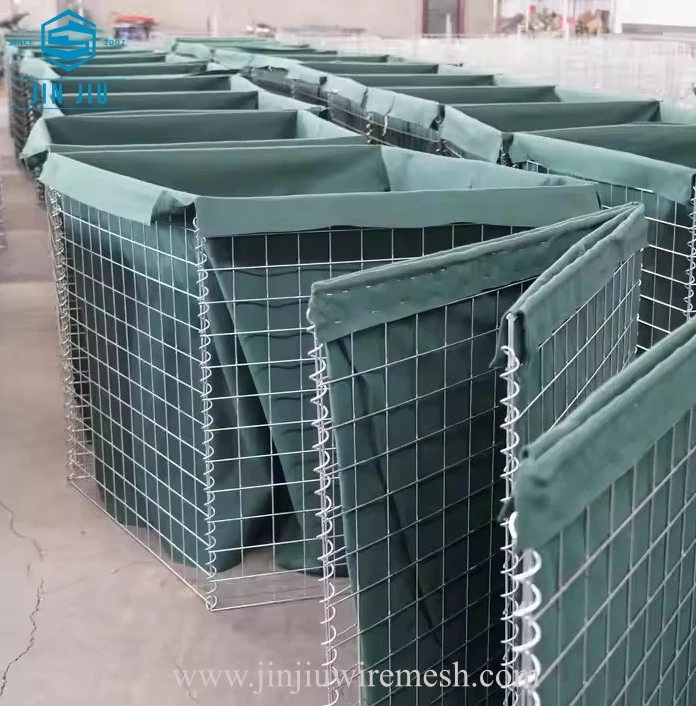
The Evolution of Physical Protection: Bullet Resistant Defensive Barriers in Modern Security
In an increasingly unpredictable global landscape, the requirement for high-level ballistic protection has moved beyond the battlefield and into the core of civilian and industrial security infrastructure.
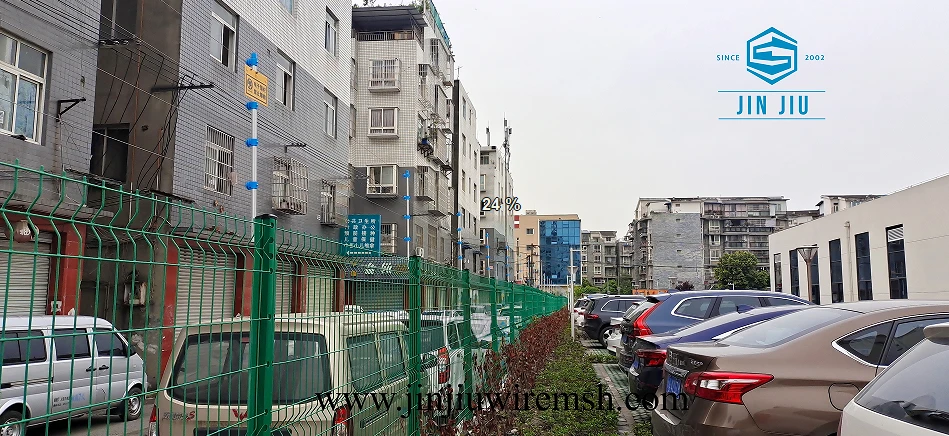
2026-02-25 15:26:58
The Digital Backbone of Modern Security: Connected Pulse Monitoring Electric Fence Architecture
The traditional concept of a perimeter has undergone a fundamental transformation.
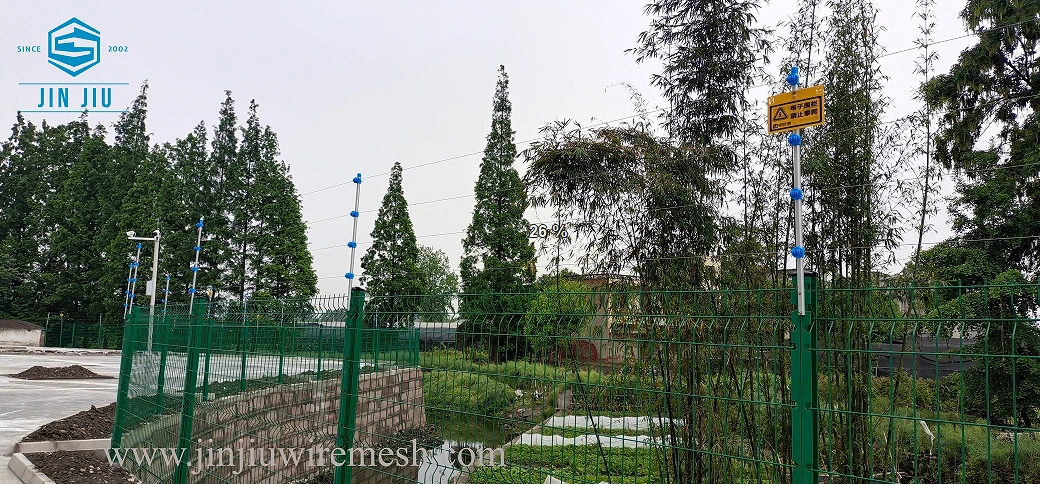
2026-02-25 15:24:13
Securing the Unreachable with a Powerful Pulse Electric Fence
In the realm of global security, the distinction between a standard boundary and a high-security perimeter is often defined by the technology pulsing through the wires.
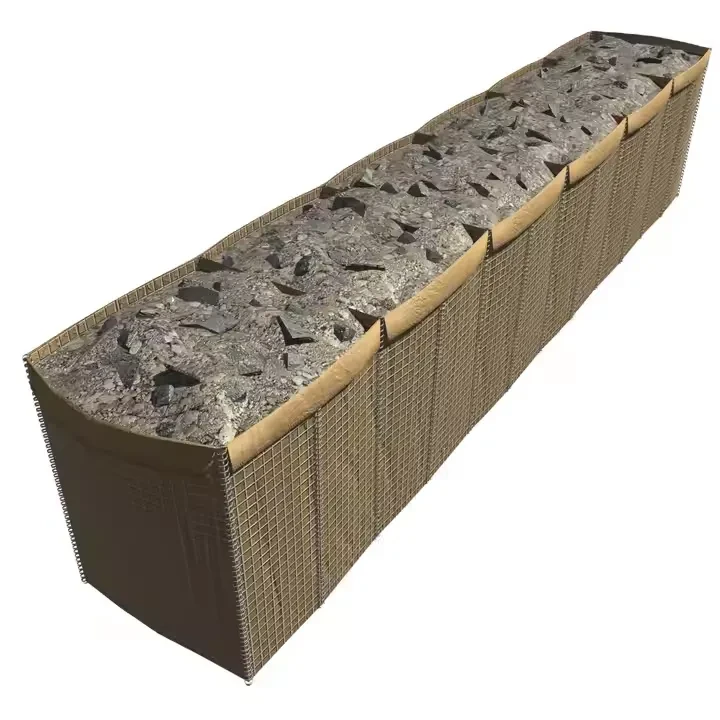
2027-04-14 00:00:00
Engineering Resilience with Explosion Proof Defensive Barriers
In an era where industrial safety and national security are increasingly intertwined, the necessity for specialized protection in volatile environments has never been higher.


 English
  Albanian
  Arabic
  Bengali
  Czech
Czech  Danish
  Dutch
Dutch  Finnish
  French
  German
  Japanese
  Malay
Malay  Persian
  Polish
  Portuguese
  Romanian
  Russian
  Serbian
  Spanish
  Swahili