





Hebei Jinjiu Metal Products Co.,Ltd



From Stone Wall Spikes to Steel: The Evolution of Perimeter Defense
Sep . 09, 2025 15:09
The primal instinct to mark territory and repel intruders is etched deep into human history, finding one of its most enduring expressions in the wall spike. What began as rudimentary stone protrusions on ancient fortifications has evolved into sophisticated anti climb wall spikes systems, defining modern wall spikes security. This journey from jagged rocks to precision-engineered steel deterrents reflects a relentless pursuit of security, transforming passive barriers into active psychological and physical shields. The core principle remains unchanged: make the boundary impassable. Today, this ancient concept underpins a massive wholesale industry supplying global security needs, proving that sometimes, the sharpest ideas are the oldest.
Ancient Foundations: The Primordial Wall Spike
Long before steel factories, early civilizations grasped the deterrent power of pointed barriers. These primitive wall spikes laid the groundwork for millennia of defensive innovation:
- Prehistoric Prototypes:Evidence suggests Neolithic communities embedded sharpened sticks and animal bones atop earthen mounds and wooden palisades, creating the earliest known anti climb obstacles against predators and rival groups.
- Bronze Age Fortifications:Mycenaean citadels featured stone walls with strategically placed, outward-jutting stone spikes or dragon's teeth, designed to hinder siege ladders and scaling attempts – a literal stone-age wall spikes security measure.
- Global Parallels:Similar concepts emerged independently worldwide. Pre-Columbian Mesoamerican cities used tzompantliand spiked wooden barriers, while ancient Chinese fortifications incorporated protruding stone and bamboo spikes on ramparts.
This era proved the fundamental effectiveness of projecting hazards as a primary perimeter defense strategy.
Medieval Wall Spike Ingenuity: Refining the Anti-Climb Arsenal
The Middle Ages witnessed a dramatic escalation in siege warfare, driving sophisticated adaptations of the wall spike concept:
- The Cheval de Frise:This iconic mobile spiked barrier (wooden beams studded with long iron spikes) was rolled out to block cavalry charges or breach points, acting as a versatile, deployable anti climb wall spikes system for castle gates and vulnerable walls.
- Crenellations and Machicolations:Castle battlements evolved beyond mere shields. Parapets featured merlons(raised sections) often topped with embedded iron spikes or caltrops (multi-pointed metal devices) scattered below, creating layered wall spikes security zones to deter climbers.
- Metal Takes Command:Blacksmithing advances allowed widespread use of forged iron spikes. These were embedded into mortar atop stone walls, gatehouses, and towers – significantly more durable and lethal than wood or stone predecessors, marking a leap towards modern anti climbtechnology.
Medieval engineering transformed spikes from passive obstacles into integrated, proactive defense systems.
Industrial Revolution to World Wars: Standardizing Wall Spike Security
Mass production and global conflict catalyzed the transition from artisanal forging to standardized wall spikes security solutions:
- Broken Glass Emerges:The Victorian era saw the widespread practice of embedding shards of glass into mortar atop garden walls and factory perimeters – a cheap, readily available form of anti climb wall spikes that dominated urban security .
- Barbed Wire's Influence:The invention of barbed wirerevolutionized perimeter security, offering mass-produced, easily deployable barriers. Its success highlighted the demand for scalable deterrents and paved the way for dedicated wall spike products.
- War-Driven Demand:World Wars I and II created unprecedented need for perimeter security around military installations, POW camps, and sensitive infrastructure. This spurred the first dedicated factories producing standardized metal wall spikes, moving beyond improvised solutions towards engineered wall spikes securityproducts.
This period established the foundation for wholesale manufacturing of perimeter defense hardware.
The Modern Anti Climb Wall Spikes Revolution
Post-WWII technological and material advancements birthed the specialized anti climb wall spikes industry we know today:
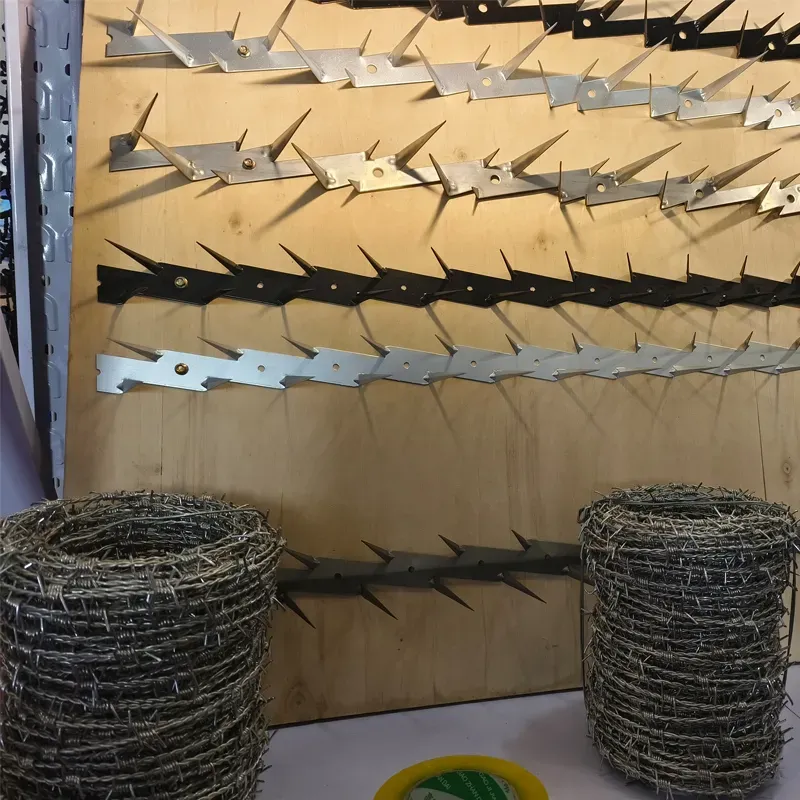
- Precision Engineering:Modern spikes are no longer crude projections. Designs incorporate specific angles (straight, curved, angled), lengths, and densities optimized to deter climbers without providing footholds, while minimizing potential liability with controlled sharpness.
- Modular Systems & Coatings:Standardized base plates allow rapid installation on diverse surfaces (concrete, brick, metal). Advanced surface treatmentslike hot-dip galvanization, powder coating, and PVC sleeving provide decades of rust resistance and aesthetic options.
- Wholesale Manufacturing Scale:Meetingglobal demand for wall spikes security requires industrial-scale production. Companies like Hebei Jinjiu Metal Products Co., Ltd leverage over 20 years of expertise in architectural wire mesh and metal fabrication. Their specialization in mesh pattern design, surface treatment service, frame design, and installation systems translates directly into high-volume production of durable, effective anti climb wall spikes. Their commitment to high quality work and excellent customer service ensures reliable wholesale supply for large-scale projects – from prison perimeters to critical infrastructure protection – where bulk orders and consistent performance are paramount. Their repeat clients and referrals underscore the importance of trusted wholesale partners in global security infrastructure.
FAQ: Piercing Questions About Wall Spikes Security
Are anti climb wall spikes legal?
Legality varies significantly by jurisdiction. Generally, they are permitted on private property for security, but regulations often govern height, placement (e.g., not over public pathways), sharpness, and the requirement for warning signs. Always consult local laws before installation.
How effective are modern wall spikes compared to broken glass or barbed wire?
Modern anti climb wall spikes are vastly superior. They offer longer lifespan , greater structural integrity, consistent deterrent effect without crumbling, easier installation, and enhanced safety . They are more visually discreet and often more legally defensible than barbed wire on walls.
What's the key advantage of stainless steel for wall spikes security?
Stainless steel provides exceptional corrosion resistance, crucial for exterior use exposed to rain, humidity, and pollution. This ensures decades of reliable performance with minimal maintenance, maintaining structural integrity and sharpness far longer than mild steel, even with protective coatings.
Can anti climb wall spikes be installed on any wall surface?
Virtually yes, with the correct mounting system. Robust base plates are designed for secure fixing via heavy-duty bolts, chemical anchors, or welding onto concrete, brick, stone, metal railings, and even wooden surfaces (with reinforced backing). Professional assessment ensures proper load-bearing capacity.
Why is wholesale crucial for large-scale wall spikes security projects?
Wholesale supply is essential for cost-efficiency, consistency, and timely delivery on large projects (prisons, industrial complexes, border installations, city-wide security initiatives). Manufacturers like Hebei Jinjiu leverage economies of scale, offer bulk customization (spike density, height, coating), and provide dedicated logistics, ensuring uniform quality and meeting the massive quantities required far more effectively.
The journey of the wall spike – from chiseled stone on Mycenean ramparts to laser-cut stainless steel on contemporary fortifications – is a testament to the enduring need for defined boundaries and robust security. While materials and manufacturing have undergone a revolution, the core purpose remains: to deter, to defend, and to declare a perimeter inviolate. The rise of specialized anti climb wall spikes and the wholesale infrastructure supporting them highlight how this ancient concept has been refined into a critical component of modern wall spikes security, proving that the simplest deterrents, honed by millennia of innovation, often remain the most effective.

Related Products

Related News


2026-03-16 14:21:07
Discover durable farming solutions and flexible animal containment with hinge-knot field fence. Combining impact-resistant design and customizable options, Hebei Jinjiu ensures quality for agricultural applications. Explore now: https://www.jinjiuwiremesh.com/field-fencefarm-fence.html
2026-03-16 14:21:07
Discover durable farming solutions and flexible animal containment with hinge-knot field fence. Combining impact-resistant design and customizable options, Hebei Jinjiu ensures quality for agricultural applications. Explore now: https://www.jinjiuwiremesh.com/field-fencefarm-fence.html
2027-04-14 00:00:00
Discover durable farming solutions and flexible animal containment with hinge-knot field fence. Combining impact-resistant design and customizable options, Hebei Jinjiu ensures quality for agricultural applications. Explore now: https://www.jinjiuwiremesh.com/field-fencefarm-fence.html
2026-02-25 15:31:06
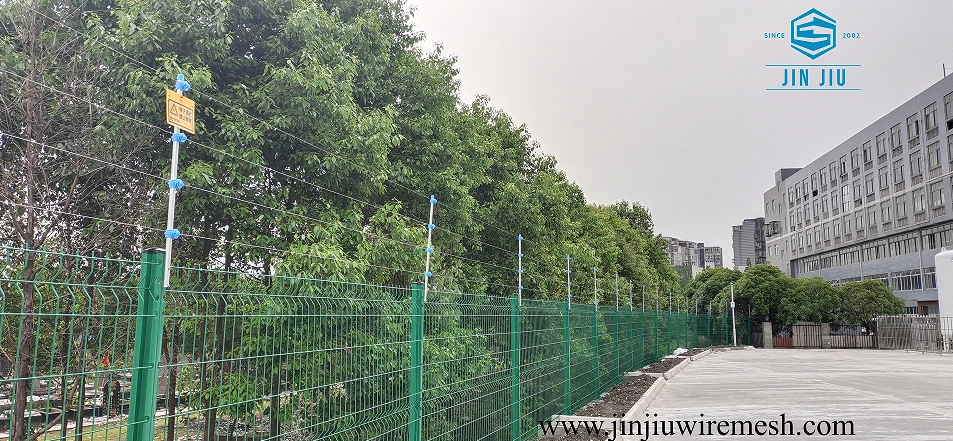
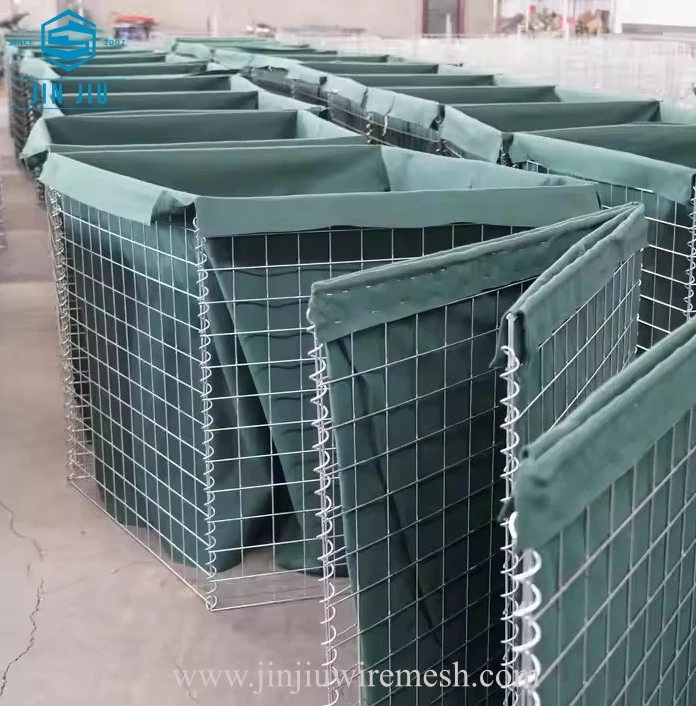
The Strategic Role of the Industrial Electric Fence in Modern Commerce
The protection of corporate and manufacturing assets has transitioned from a matter of simple boundary marking to a complex necessity of risk management.
2026-02-25 15:29:03
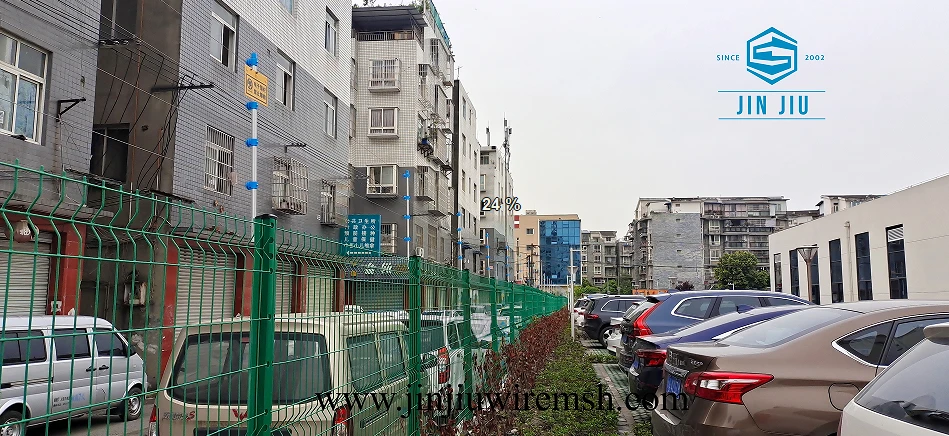
The Evolution of Physical Protection: Bullet Resistant Defensive Barriers in Modern Security
In an increasingly unpredictable global landscape, the requirement for high-level ballistic protection has moved beyond the battlefield and into the core of civilian and industrial security infrastructure.
2026-02-25 15:26:58
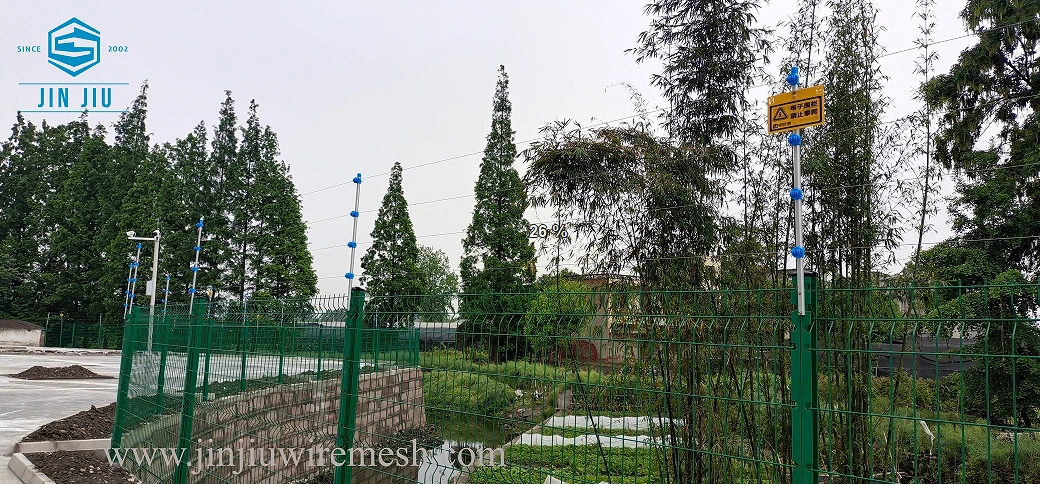
The Digital Backbone of Modern Security: Connected Pulse Monitoring Electric Fence Architecture
The traditional concept of a perimeter has undergone a fundamental transformation.
2026-02-25 15:24:13
Securing the Unreachable with a Powerful Pulse Electric Fence
In the realm of global security, the distinction between a standard boundary and a high-security perimeter is often defined by the technology pulsing through the wires.
2027-04-14 00:00:00
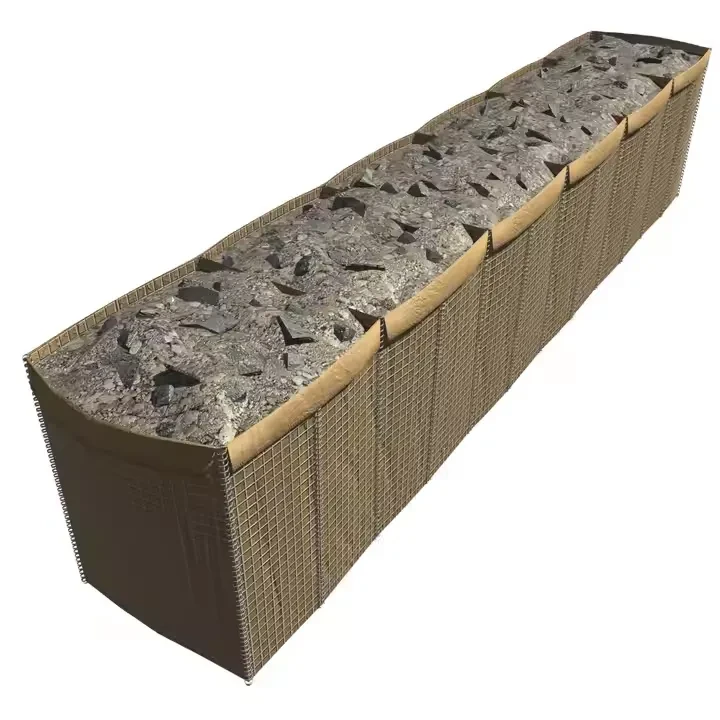
Engineering Resilience with Explosion Proof Defensive Barriers
In an era where industrial safety and national security are increasingly intertwined, the necessity for specialized protection in volatile environments has never been higher.


 English
  Albanian
  Arabic
  Bengali
  Czech
Czech  Danish
  Dutch
Dutch  Finnish
  French
  German
  Japanese
  Malay
Malay  Persian
  Polish
  Portuguese
  Romanian
  Russian
  Serbian
  Spanish
  Swahili